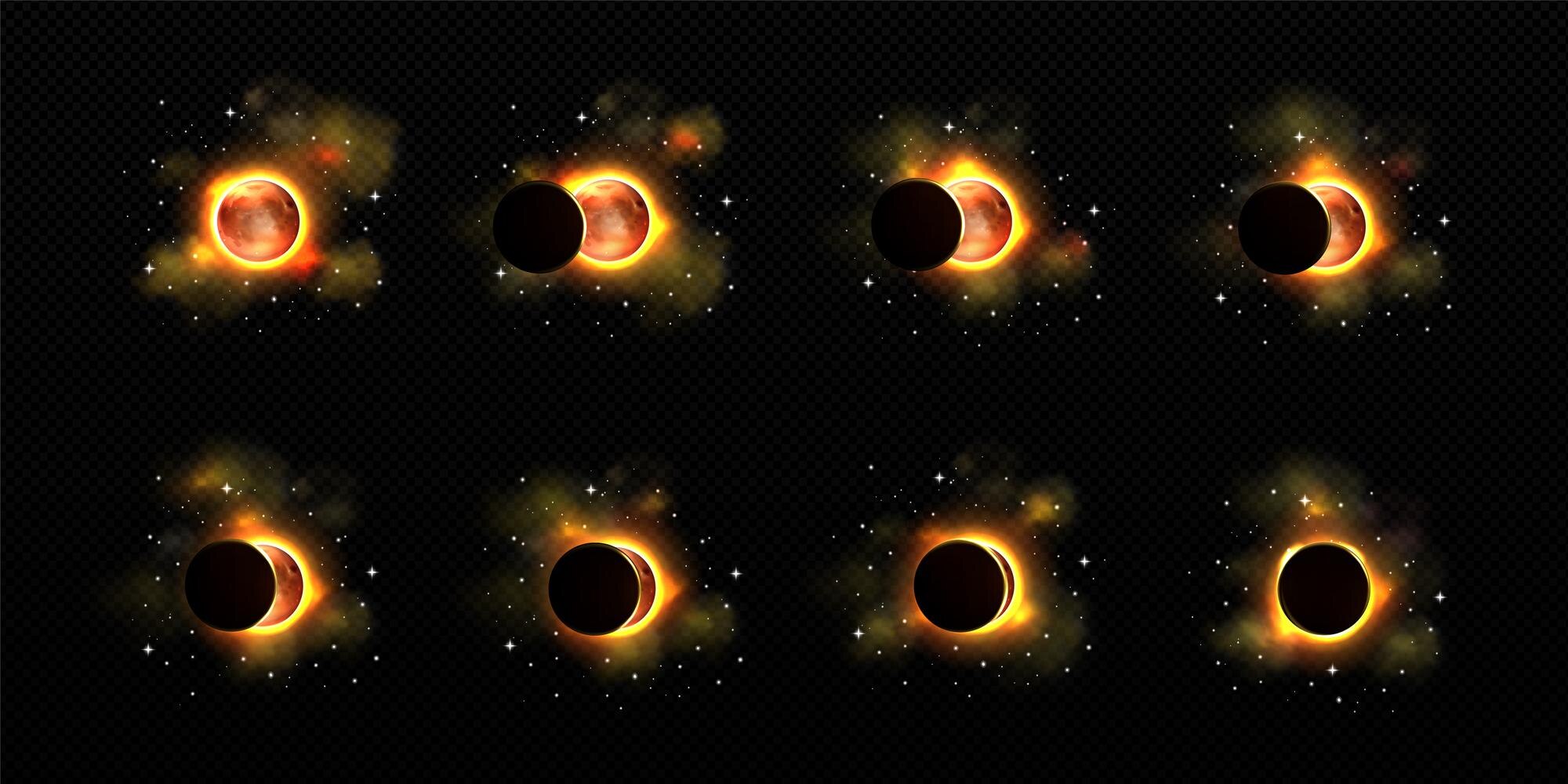
Very soon, we are about to witness the Solar Eclipse on 12th August this year. It will be the first total eclipse on Earth after 28 months. The last total eclipse was witnessed on 8th April 2024 in Burlington, Vermont. On average, a total solar eclipse occurs once every sixteen months in our solar system. The last time when the Moon totally concealed the Sun was on April 8, 2024, and was visible across Mexico, the United States, and Canada.
The line of totality for the eclipse on August 12, 2026, will start in the very north of Russia and go across Greenland and the western edge of Iceland. It then goes across northern and eastern Spain. This will also cover a few parts of northeastern Portugal. Nearly the whole of Europe will encounter a partial eclipse on that very day.
It is estimated that nearly a billion people will be able to witness a partial or total solar eclipse on August 12, 2026.
Eclipses have always fascinated us, but do you know that there have been so many myths and tales linked to solar eclipses from around the world? Though none have any factual explanation, all of them are quite mystifying.
In this blog, we have explored some of the traditional and mystical folklore stories and myths from around the world associated with solar eclipses.
6 Mystical Myths From Across The World Linked To Solar Eclipses
From ancient times, it is believed by many communities from across the globe that an eclipse is considered to be a disruption to regular events that brings bad omens. Even though there is no scientific explanation for these myths, they do carry some strong spiritual explanations and are still highly valued by these communities.
Let’s continue reading to explore this more.
Native America
It is believed, as per the Choctaw community, that a wicked black squirrel nibbles the Sun, causing a solar eclipse. That’s when the community people ran outside their homes to shout and bang pots to scare and drive the squirrel away to free the Sun.
As per the Cherokee legends, a giant frog tries to gulp the Sun. During such an event, people would howl and bang rocks to save the Sun and restore balance.
Some communities believed this was an event depicting the cycle of death and rebirth, where the Sun is darkened due to its death, followed by sacred rebirth when the eclipse ends.
To show respect for the event, tradition encourages remaining indoors, fasting, praying, and avoiding staring at the sun.
Chinese
As per ancient Chinese folklore, a solar eclipse occurs when a celestial beast, such as a gigantic dragon or a vicious heavenly dog called Tiangou, attempts to swallow the sun. To scare the monster away and restore the light, local natives would group up to beat loud drums, crash gongs, and launch arrows into the sky. Eclipses were often seen as fire warnings or cosmic omens that could impact the Emperor's health, fortune, and legitimacy.
Incan
The people from the Inca community of South America worship the Sun God Inti. Inti was generally regarded as powerful yet benevolent in nature, although solar eclipses were seen as a manifestation of his wrath and displeasure. The spiritual leaders of the community used to figure out why an eclipse occurred and why Inti was angry, and what sacrifices should be made to please and calm him. Although the Inca rarely conducted human sacrifice, it is believed that an eclipse was sometimes judged significant enough to warrant it. The community also practiced fasting, and the monarch would frequently abstain from public activities during and after an eclipse.
Indian
As per Hindu traditional belief, a powerful, cunning demon named Rahu disguised himself as a deity and drank the pious nectar of the Gods that grants immortality. But before the elixir reached his body through his throat, he was beheaded by Lord Vishnu. It is believed that demon Rahu is in his never-ending quest for the Sun; his eternal head occasionally catches and consumes it, but because Rahu lacks a neck, the Sun soon emerges again, and that’s how solar eclipses occur.
Eclipses are regarded as an inauspicious period when evil forces temporarily triumph over the life-giving Sun. People avoid cooking or eating during an eclipse because Rahu's shadow might contaminate food. Especially pregnant women and babies need to be protected during this time because it is believed that Rahu's negative energies may harm the mother and the child.
Egyptian
Though there are no mythological tales related to solar eclipses in Egyptian culture, Egyptian scholars associate solar eclipses with the sun god. According to some scholars, eclipses were considered extremely disturbing events. They were deliberately not documented to avoid tempting the sun deity Re (Ra) or to "endow the event with a degree of permanence." According to one Egyptologist, allusions to a seemingly metaphorical type of blindness may be symbolic records of past eclipse dates. Documenting bad omens or chaos might invite bad luck, so any time of recording was avoided.
West African
According to the legend of the Batammaliba people of Togo and Benin, human anger and fighting spread to the Sun and Moon, who began to battle one another, resulting in an eclipse. The legendary first mothers, Puka Puka and Kuiyecoke, encouraged the villagers to display peace to the Sun and Moon in order to persuade them to stop fighting. During an eclipse, Batammaliba people reconcile ancient feuds and calmly gather to promote harmony among the celestial bodies.
Wrapping Up
As per historical records, there have been rich and interesting mythological tales associated with the sudden darkening of the Sun due to eclipses. Most of them were like the sudden attack on the Sun by the celestial predators. And, in order to save the Sun, the communities used to take necessary actions like avoiding going out or performing holy rituals that, in a way, knowingly or unknowingly also protected them from the harmful eclipse radiation.
While ancient civilizations saw the sudden daytime darkness as an angry omen of doom, in reality, as per science, a solar eclipse occurs when the Moon passes squarely between Earth and the Sun, temporarily blocking sunlight and casting a shadow on the Earth's surface.
Do let us know which of these solar eclipse folklore tales you find most interesting?