
When Football lovers talk about great World Cup moments, they also recall the spectacular stadiums. The venues have always played a crucial role in creating the thrilling atmosphere that the FIFA World Cup tournament demands. The FIFA World Cup matches are not just a 90-minute game; they hold the emotion and madness of millions. This grandeur demands the grandest stages on earth. While the players generate the magic on the pitch, the stadiums become the soul to witness the echoing roars, uncontrollable emotions, and the prevailing exciting atmosphere.
While hundreds of stadiums have hosted games over the years, just a few stand out for their historical significance, design, and legendary reputation. Whether you value historic football legacy or cutting-edge modern architecture, these grounds are the apex of sports stadiums.
In this blog post, we will count down the top five World Cup venues that have made an unforgettable impression on football history.
Top 5 FIFA World Cup Stadiums That Marks The History Of Football
Estadio Azteca, México
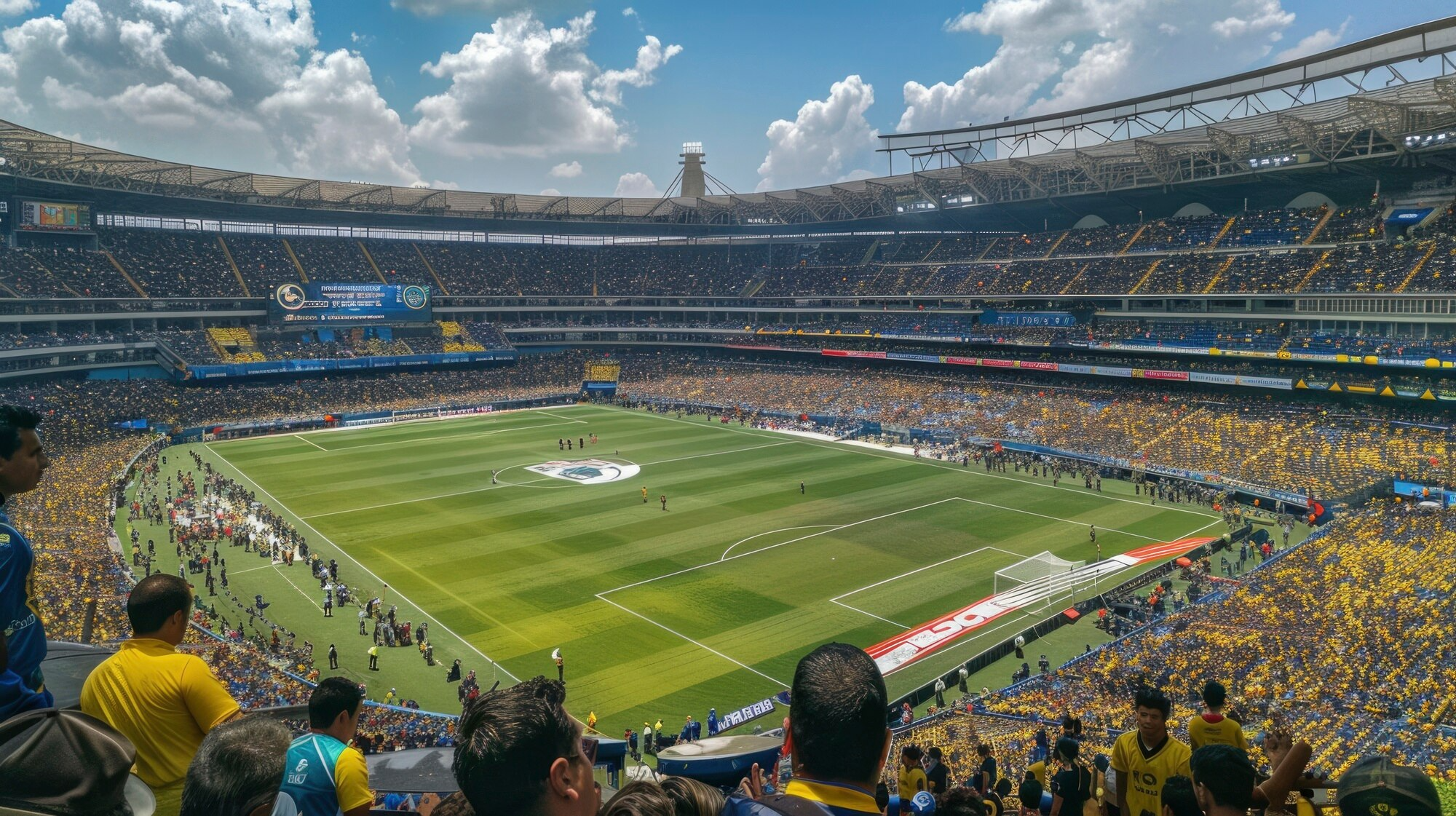
This stadium is considered to be highly famous and iconic of all time as it is the first to host two FIFA World Cup finals, in the years 1970 and 1986, and one quarter-final match in the same year of 1986. This stadium is also referred to as the “Temple of Cathedral of Football”.
It is the official home of both the football team Club América and the Mexican national team. The stadium is situated at an elevation of 2,200 metres (7,200 feet) above sea level. It has a capacity of 87,523, making it Latin America's largest stadium and the world's eighth-largest association football arena.
Estadio Azteca, which was formerly known as Estadio Banorte for sponsorship reasons, is now famously referred to as Mexico City Stadium during the 2026 FIFA World Cup. Thi stadium has witnessed two historic wins of Brazil defeating Italy in the 1970 FIFA World Cup and Argentina defeating West Germany in the year 1986.
It also hosted the 1986 quarter-final encounter between Argentina and England in which Diego Maradona scored both the "Hand of God goal" and the "Goal of the Century". The Estadio Azteca is the only football arena in the world where two of the greatest football players of all time, Pelé (1970) and Diego Maradona (1986), both won the FIFA World Cup.
Estádio do Maracanã

One of the most famous football stadiums in the world, Estádio do Maracanã, is situated in Rio de Janeiro, Brazil, and was the focal point and last location of the FIFA World Cups in 1950 and 2014.
The stadium opened in 1950 to host the FIFA World Cup. On July 16, 1950, Uruguay defeated Brazil by 2-1 in the championship match. The current seating capacity after renovation is 73,139, and it is still considered the biggest stadium in Brazil and the third largest in South America.
Rio de Janeiro, Brazil's Estádio do Maracanã, also called Estádio Jornalista Mỹ Filho, is an association football stadium, owned by the state government of Rio de Janeiro and run by the teams Flamengo and Fluminense. It is situated in the Maracanã neighbourhood.
The stadium was opened in 1950 to host the FIFA World Cup, in which Brazil was beaten 2–1 by Uruguay in the deciding game on 16 July 1950. It remains the largest stadium in Brazil and the third largest in South America after Estadio Monumental in Argentina and Estadio Monumental in Peru.
Estadio Centenario, Uruguay

Uruguay's Estadio Centenario is the world's only football monument inaugurated in the year 1930. The stadium was initially constructed between 1929 and 1930 and was ready to host the 1930’s inaugural FIFA World Cup ceremony. The Estadio Centenario held 10 FIFA World Cup matches in 1930, including the semi-finals and final. It has witnessed the unforgettable win of Uruguay over Argentina in the 1930s FIFA World Cup Final by 4-2.
This stadium is listed as one of the world's classic football stadiums. FIFA designated it as the first Historical Monument of World Football on July 18, 1983, and it remains the only building in the world to have received this honor.
This stadium is owned by the Montevideo Department and is located in the Parque Batlle neighbourhood. Uruguay's main stadium, Estadio Centenario, serves as the primary home of their national football team.
This stadium has a maximum capacity of 21,648 spectators spread over three rings.
Wembley Stadium, London, UK
Wembley Stadium famously hosted the 1966 FIFA World Cup, in which England won their first and only trophy by defeating West Germany 4-2 in the final. Queen Elizabeth II inaugurated the 1966 World Cup tournament at Wembley Stadium. England played all of their group matches, the dramatic quarterfinal against Argentina, the semifinal against Portugal, and the final on this field. This is the same place where Geoff Hurst scored a memorable hat-trick (including a controversial "crossbar" goal) to secure the 4-2 extra-time win on July 30, 1966.
The newly renovated stadium architecture has the capacity to hold 90,000 spectators, making it the second largest stadium in Europe and the largest stadium in the UK.
Rose Bowl (Pasadena, US)
The Rose Bowl in Pasadena, California, is one of the world's most recognizable stadiums, having hosted the 1994 FIFA World Cup Final and the 1999 FIFA Women's World Cup Final. It remains the only stadium in history to host both major championship games.
The stadium hosted seven total matches, including the historic World Cup final between Brazil and Italy on June 30, 1992, in front of almost 94,000 spectators. The match concluded 0-0 after extra time, with Brazil winning the match 3-2 on penalties. This was the first World Cup final decided by a shootout.
This stadium was first built in the year 1922, and was listed on the US National Register of Historic Places. This stadium has a capacity of about 90,888 seats and is considered as the 20th-largest stadium in the world, the 11th-largest in the United States, and the tenth-largest NCAA stadium.
Time To Wrap Up
Every football fan recalls the memorable goals, thrilling penalty shootouts, and momentous trophy lifts that define the FIFA World Cup. The majestic stadiums that welcome the world, however, serve as silent witnesses to all of this exciting drama. These architectural marvels not only captivate hundreds of football fanatics but also capture the distinct culture and passion of their host countries.
The above-listed five football stadiums are iconic landmarks. They hold the tournament's most vivid memories. From historical grounds to new masterpieces. These stages transformed contests into legends. With every new FIFA World Cup Event, new venues come up, rotating along with the old ones. However, these five stadiums are still considered the pinnacles. They symbolize the core of football history.
Every great World Cup needs an iconic stage. These five venues created absolute magic and will always stay historical. They fully captivated the world's passion. Every FIFA World Cup stadium showcases its passion, which is unique to the place and its culture, thus delivering an unforgettable experience. Now, would you like to tell us which is your favorite stadium?